Production Budgets
Writing a UGC production scope before requesting quotes
Write a quote-ready UGC scope covering assumptions, deliverables, revisions, usage and exclusions.
A quote-ready UGC scope defines what each creator or supplier will make, what the brand provides, what delivery includes and where the finished work may be used. Use the same scope for every supplier so replies can be compared.
Set the project assumptions
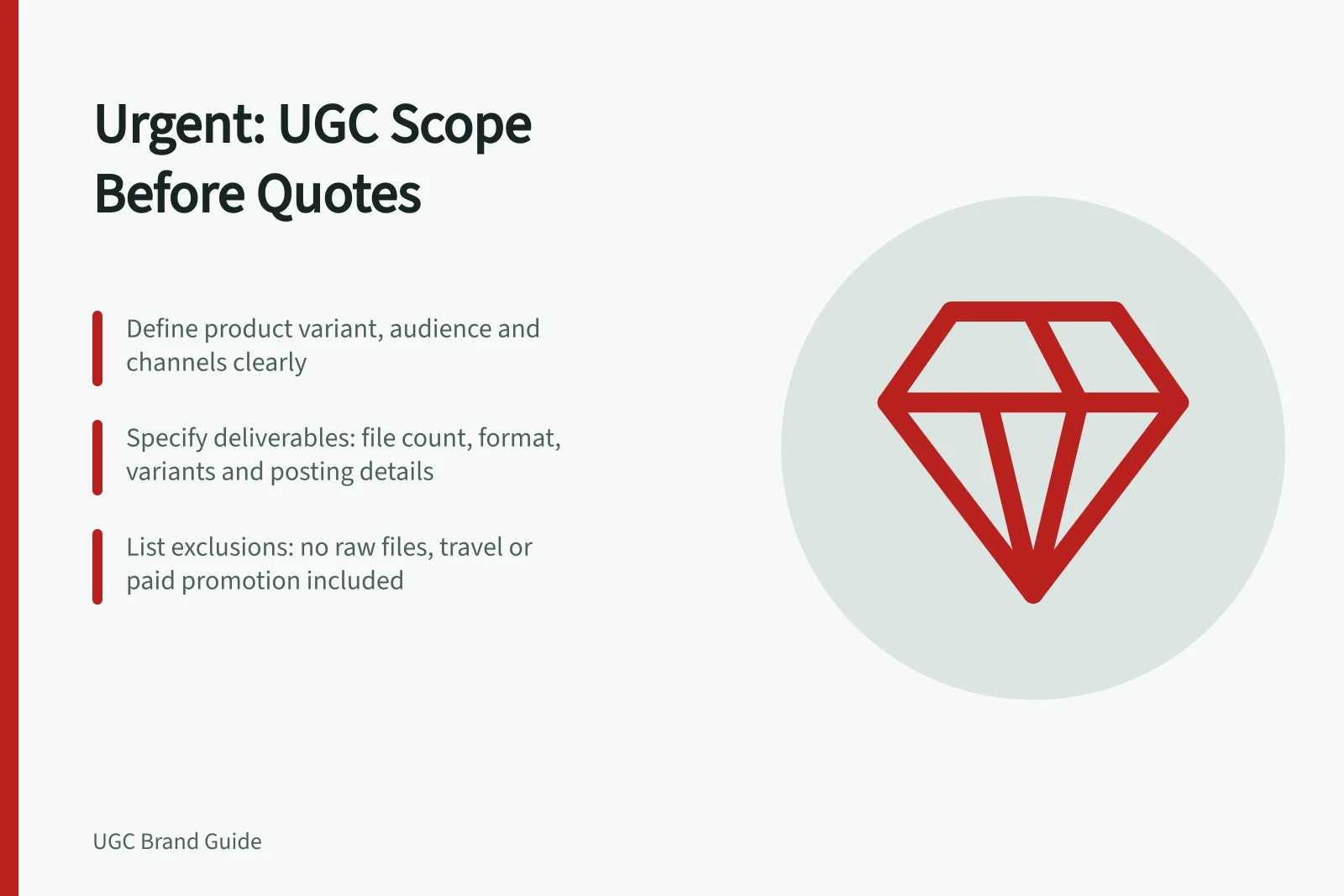
Name the product and exact variant, campaign purpose, intended audience and planned channels. State whether the creator must appear on camera, publish to their account or only deliver files. Include filming conditions that affect the work, and identify the product, instructions and verified claims the brand will supply.
Set dates for product arrival, first delivery, feedback and final approval. If shipping is uncertain, define when the production period begins. Ask suppliers to identify assumptions they cannot meet in their reply.
List countable outputs
For each deliverable, state what will be supplied and how it will be accepted:
- Finished files:number of videos or images, orientation, approximate duration or size where relevant, and export format.
- Variants:alternate openings, captions, thumbnails or stills, if needed.
- Source material:raw footage, separate audio or project files, if required.
- Posting:account, format and publication window, if a creator post is included.
- Review:number of feedback rounds, who combines comments and when responses are due.
Distinguish correcting a missing agreed shot from requesting an additional product after filming. State how each will be handled and when a new quote is needed. The commercial terms remain negotiable.
Describe usage and exclusions
List the brand, agency or other intended users, organic and paid channels, territory, period, and permitted crops or shorter edits. IP Australia explains that a licence permits use without necessarily transferring ownership. “All usage included” does not tell suppliers what use to price. Ask them to identify any terms they would offer differently.
State what falls outside the base quote, such as posting, paid promotion, raw files, extra versions, travel, special props, additional feedback or a reshoot after a changed brief. If music is proposed, ask who supplies it, what permission covers the intended use, and who is responsible for obtaining any music permissions.
Pros and cons of including raw footage in the base scope
- ProsAllows for future edits or repurposing - Supports compliance with ATO and ACCC advertising standards by retaining original content - Enables internal review and quality control
- ConsIncreases production cost and storage needs - May require additional licensing for reuse - Can lead to unauthorised sharing if not managed securely
Compare the replies
Ask each supplier to price the base scope, itemise extras, list exclusions and confirm the delivery and usage terms offered. Compare what each quote includes before comparing totals.
An acceptance condition can be simple: for a product demonstration, require the specified variant to be visible and the agreed action to be shown completely. The brand should supply verified facts and review the final impression.
The ACCC can require businesses to back up claims they make about their products or services, and it can investigate misleading conduct and may take compliance or enforcement action. After selecting a supplier, use the creative brief to develop the message and shot plan.