Editing and Placements
Part of UGC scripts and spoken delivery
Keeping a UGC voiceover in sync with the demonstration
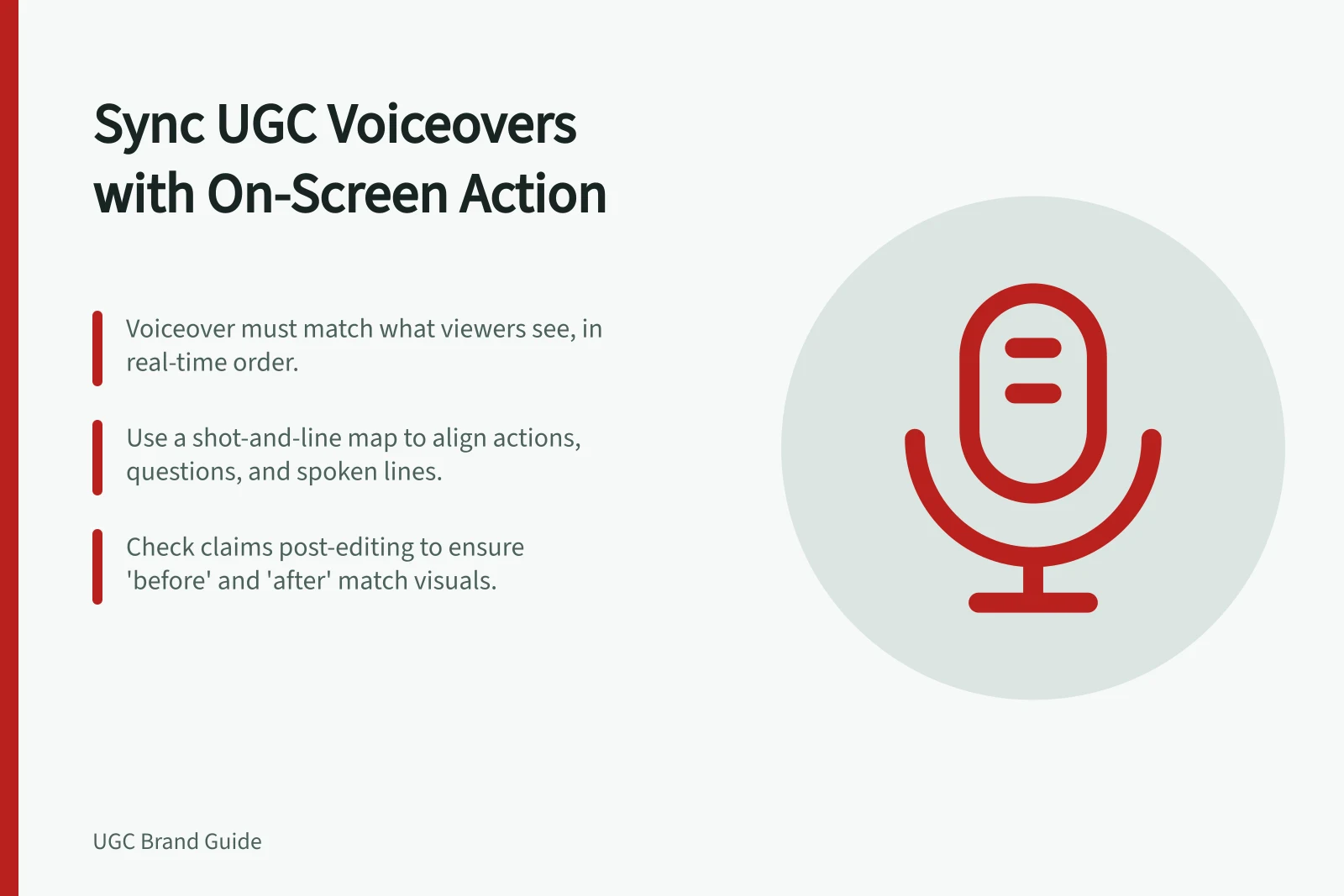
A voiceover should describe what the viewer can see, in the order it happens.
A voiceover should describe what the viewer can see, in the order it happens. If speech outruns the demonstration or refers to an unseen result, the audience must trust a claim the video has not shown.
Build a shot-and-line map
List the action, the question it answers and the corresponding spoken line. For example: show the lid opening while explaining access, then show the compartment while describing what fits. State setup conditions before the result if they affect what viewers should expect.
A short sequence can focus on one buyer question rather than rushing through every feature.
Record a rough voice track against the footage and identify where the speaker must race to finish. Shorten the sentence or lengthen the relevant shot. Do not cover an awkward step with a jump cut while the voice says the process was effortless.
Audit claims after editing
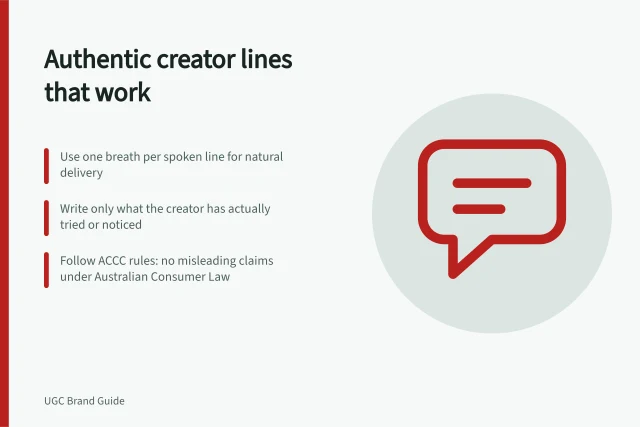
The final order may differ from the filming order. Check that “before”, “after”, “included” and “ready to use” still mean what the pictures show. If the voiceover reports a personal experience, confirm the creator actually had it.
The ACCC can require businesses to back up claims they make about products or services. Under the Australian Consumer Law, businesses must not mislead or deceive consumers, including when influencers engage in trade or commerce.
Captions should match the spoken claim and remain readable during the relevant action. Watch the finished piece without sound and then without captions: each version should still communicate the essential product detail without creating a contradictory impression.