Creator Sourcing
Reviewing a UGC portfolio for product demonstration skills
Assess a UGC creator's portfolio for clear product setup, visible action, accurate claims and useful demonstration footage.
Review a UGC portfolio by asking what a viewer learns about the product. Find a complete example, watch the action from setup to result, and note what the creator clarified or left uncertain. Past work shows a skill under past conditions; it does not guarantee the next delivery.
Choose examples that resemble the assignment
Ask for complete pieces showing actions similar to yours. For a product that needs assembly, a beauty montage is weak evidence even if it is well filmed.
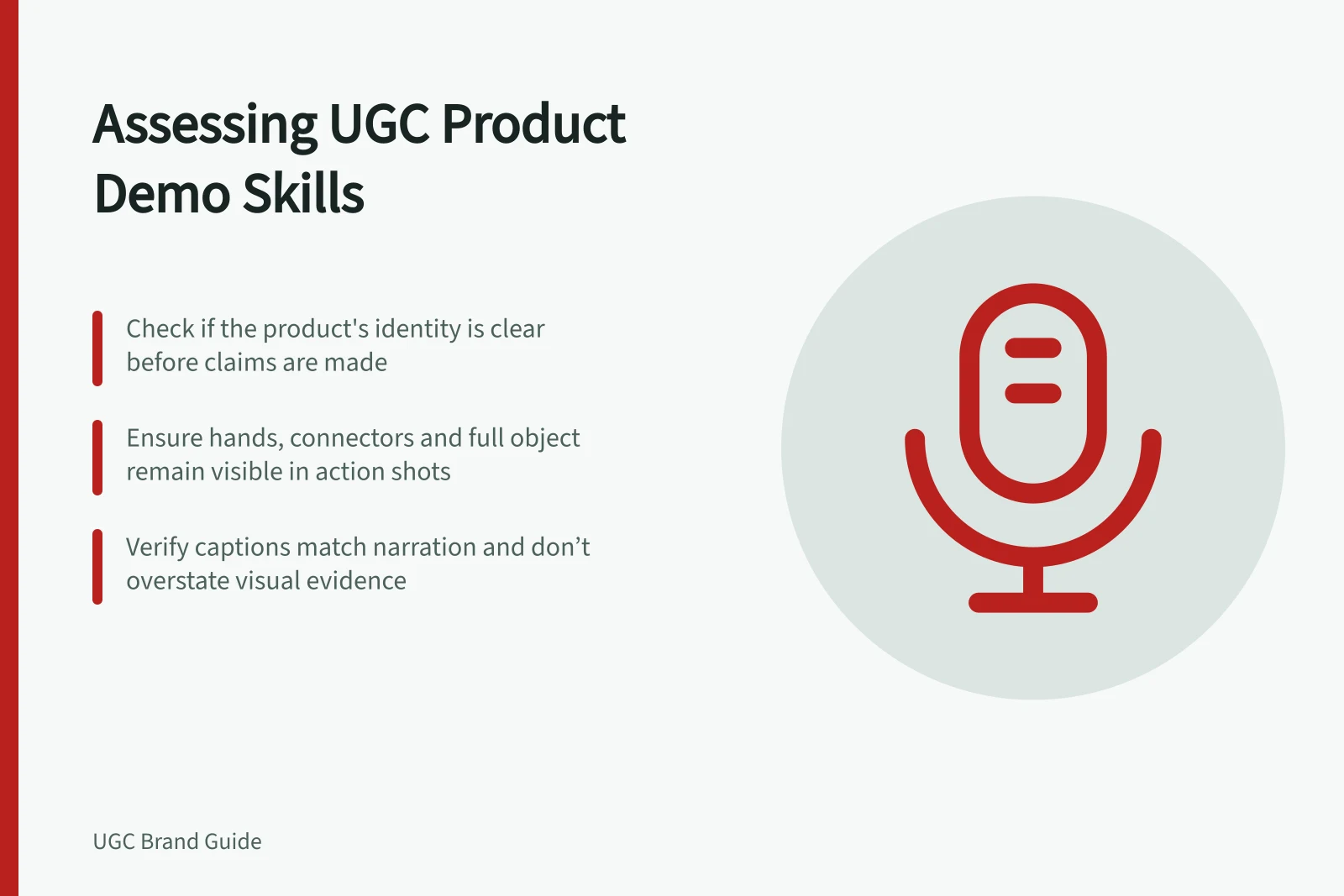
For a small item with moving parts, look for footage where hands, connectors and the full object remain visible. Ask which parts the creator filmed, scripted and edited, especially if the portfolio includes team projects.
Watch the final video and, where available, a longer cut. Short clips show pace and style; longer sequences reveal whether a viewer can follow the work.
Do not require confidential client files. A published example and a discussion of the creator's role may be enough to decide whether a paid sample is useful.
Follow the product action
Pause at four points:
- Identity:Can you tell which product or variant is shown before a claim is made?
- Setup:Can you see the item, accessories and conditions needed for the action?
- Action:Does the camera show the step a buyer might struggle with, or cut past it?
- Result:Is the outcome visible long enough to assess, with any important limit kept in view?
For example, a storage organiser demonstration could show what goes into a compartment and how it closes. A close-up of the closed organiser cannot show whether the opening action was clear.
Review speech and visual claims together
Play the example with sound, then watch the key sequence muted. Does the narration describe the action on screen? Does a caption make a stronger claim than the image supports?
The ACCC accepts reports about possible misleading or false claims, and it can require businesses to back up claims they make about their products or services. If a business misleads, the ACCC can investigate and may take compliance or enforcement action. A striking result in one example does not show that every customer will achieve it.
If speech is needed to understand the video, check whether captions convey it accurately. Captions should include meaningful speech and audio information, rather than turning a qualified line into a stronger claim.
Check whether the creator can supply and review captions if the intended placement calls for them.
Record an observed judgement
For each candidate, note the relevant example, product action, evidence of clear filming, unanswered question and any skill to check through a paid sample. Avoid labels such as ‘authentic’ unless you can say what you observed. A useful note might read: ‘The creator kept the connector in view during setup; ask for a sample explaining our product's release tab.’
If a portfolio establishes visual style but leaves the required demonstration skill open, request a small paid exercise. A missing example alone does not show the creator cannot do the work.