Asset Library
Part of Sourcing genuine customer contributions
Keeping customer submissions separate from commissioned UGC
Record whether content came from a customer, an incentivised review or a commissioned creator, then retain its origin through reuse.
Record how each asset came about before it enters a shared content workflow. An unsolicited customer account, a review invited with a reward and a creator's paid brief can all describe real product experience. Their similar appearance does not make their origins or approved uses the same.
Classify origin at intake
Ask who proposed the content, whether the person used the product, what the brand supplied, whether it offered a benefit or fee, and how much direction it gave. Record the answers from the submission or production history rather than judging by the video's style.
| Origin | Keep in the record | Risk if its origin is lost |
|---|---|---|
| Customer submission | The original account, product experience and any later reuse permission | An edited or selected account may be mistaken for a broader customer verdict. |
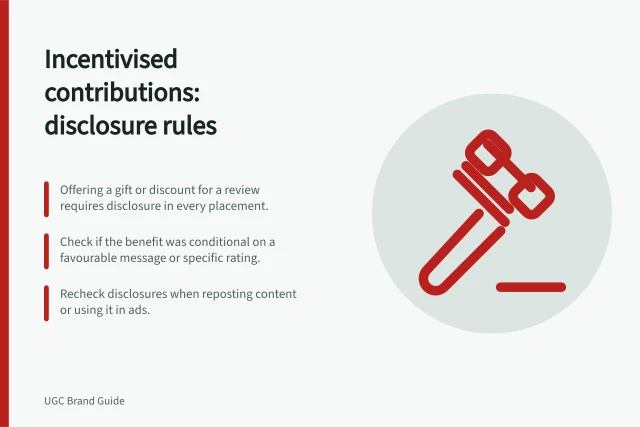
| Incentivised customer review | The invitation, experience and benefit offered for the review | Readers may assume the review was uncompensated. |
| Commissioned creator asset | The brief, production relationship, delivered file and any actual personal experience | A paid demonstration may be mistaken for an independent customer review. |
These are editorial categories, not a legal definition of UGC. A creator may also be a customer; record both facts. A customer may later permit paid advertising use, but that later permission does not change how the original account arose.
Keep origin and use in separate fields
Give the asset a stable identifier and retain its original words or file. Record the contributor, product and variant, date received, invitation or brief, benefit or fee, material edits and proposed placements. Use separate fields for origin and approved use. A single 'approved' label does not reveal whether the item began as a review or commissioned production, or which placement was cleared.
A useful hand-off entry might state: 'Customer photo supplied after purchase; review incentive not recorded; one brand social post covered; paid ad use unresolved.' That is an illustrative record, not a real asset. It shows the next editor which point still needs an answer.
Preserve the public meaning
The ACCC accepts reports about fake or misleading online reviews and review manipulation, and can investigate if a business misleads people in relation to reviews. The ACCC has also identified inadequate disclosure of payment, gifts or other incentives in influencer posts as a concern. A paid creator's actual experience need not be false, but do not file their commissioned demonstration as an independent customer review.
Keep moderation of a review collection separate from choosing creative for a campaign. Removing genuine negative reviews or editing out their material reservations can distort the review record. A customer's experience of one use also does not establish a general product claim when reused in an ad.
Check the hand-off
Before moving an asset to a channel, compare its origin record, exact edit, relevant disclosure and permission with the proposed placement. If its origin is uncertain, hold it while the contributor or production owner clarifies the history. Carry the classification into shorter files and later uses so a copied asset does not lose the context readers need.
This intake decision concerns provenance across channels. How testimonials and creator demonstrations appear together on a product page is a separate page-presentation decision.