Licensing
Part of Sourcing genuine customer contributions
Asking customers for permission to reuse their content
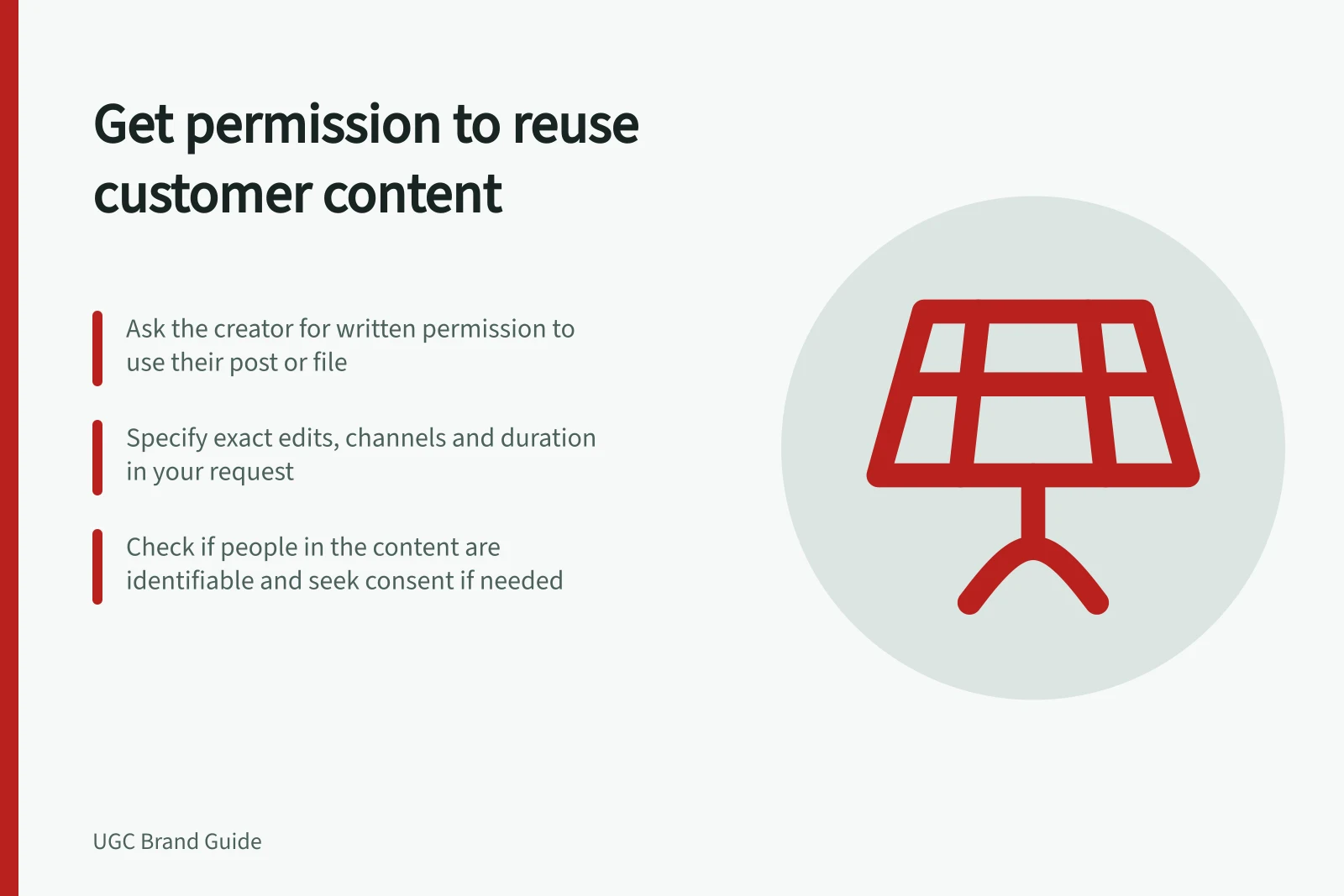
Ask for permission covering the exact customer content, proposed channels and edits, then keep the answer with the asset.
Ask whoever can authorise the content about the exact material and proposed brand use. A public post, tag or file submission does not by itself establish permission to copy the material into an ad, edit it or use it elsewhere. Keep the request and answer with the asset.
Identify who controls the work
Ask the contributor whether they made the photograph, video or words and whether anyone else created part of it. A customer appearing in a photograph may not own the photograph. Music, graphics and other included material may have separate rights.
The Australian Attorney-General’s Department says copyright material may be used with the owner’s permission or where a relevant exception or statutory licence applies. Check any existing licence for the proposed use; where direct permission is needed, seek it in writing where possible. Giving credit does not itself establish permission to copy or edit a work.
Australian legal considerations when reusing content
- Copyright ownership
- Only the creator or assignee holds copyright under Australian law
- Personal information status
- A person in an image may be personal information if identifiable
- Credit ≠ permission
- Giving attribution does not grant rights to copy, edit or reuse
- Statutory exceptions
- Limited uses allowed without permission (e.g., fair dealing)
Name the use in the request
A clear request identifies:
- the exact post or file;
- the brand or other party that will use it;
- the intended channels, including any paid advertising;
- the edits proposed, such as cropping, shortening or adding a caption;
- the intended period and any agreed credit; and
- a contact for questions about the use.
A clear, retrievable message and affirmative reply may suit a narrow use. A broader campaign may need fuller written terms.
If the brand later proposes another channel, ad or edit, compare it with what was agreed and ask again where the earlier permission does not cover it. Avoid describing paid advertising merely as a request to ‘share’ a post.
Check people separately
Permission to use the creative work does not settle how identifiable people shown or heard in it may be treated. An image or recorded voice can be personal information when someone is reasonably identifiable.
Check the proposed placement with the people concerned where appropriate, especially when another person is central to an ad. This is a practical publication check, not a claim that Australian law requires a release from everyone visible in every image.
If another person’s position remains unclear, consider a version that genuinely removes identifying details or choose different material. Review the edited version: hiding a face may leave a name, voice or distinctive setting that still identifies someone.
Retain the decision
Save the request, affirmative response, exact asset and any conditions together. Record who responded, the authority they stated, the approved channels and edits, the period, and any unresolved element. Before publication, compare the final file and placement with that record.
If the contributor later raises a concern or asks for withdrawal, check the agreed terms and current placements before responding. Do not assume either a permanent right to use the work or a withdrawal right that the agreement does not establish.